Sci-Fi HUD User Interface Design Templat: Crafting Immersive Digital Experiences
From the neon-lit dashboards of starship cockpits to the heads-up displays worn by cyberpunk infiltrators, the aesthetic of science fiction has long captured our collective imagination. Today, that aesthetic isn’t confined to cinema or gaming. Designers, developers, and content creators are increasingly turning to a Sci-Fi HUD User Interface Design Templat to bring a sense of futuristic polish and functional clarity to their projects. Whether you’re building a mobile game, prototyping a dashboard for a logistics startup, or producing a video for a tech channel, these templates offer a fast track to visual impact—without requiring you to be a seasoned illustrator or a front‑end coding expert.
Why Sci‑Fi HUD Design Matters Right Now
We live in an era where interfaces are everywhere. Smartwatches, car infotainment screens, augmented reality glasses, and even smart home panels all demand clear, engaging visual communication. The line between “real” interface design and speculative fiction has blurred. Users expect information to be delivered with a sense of immediacy, hierarchy, and atmosphere. A well‑crafted sci‑fi HUD template doesn’t just look cool—it offers a proven visual language for presenting complex data (telemetry, stats, navigation cues) in a way that feels intuitive and exciting.
Current trends in cyber‑minimalism and retro‑futurism have pushed HUD elements into mainstream design. Marketers use animated HUD overlays to make product demos feel cutting‑edge. Educators employ them to explain data flows in science or engineering. Even lifestyle brands adopt subtle HUD motifs to signal innovation. The Sci-Fi HUD User Interface Design Templat is no longer a niche asset; it’s a versatile tool for anyone who communicates visually.
Digital Data, Navigation Controls, and Interactive Gaming Elements
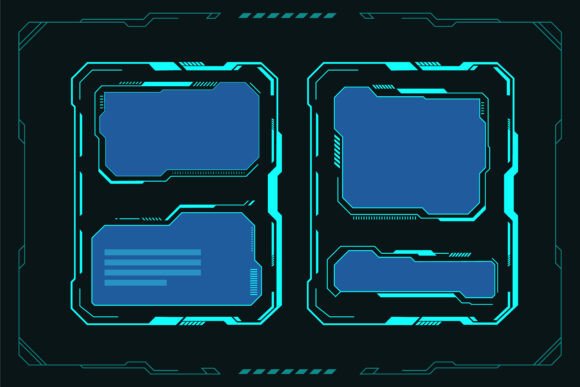
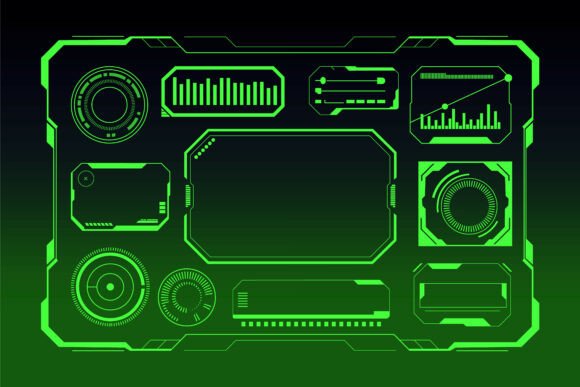
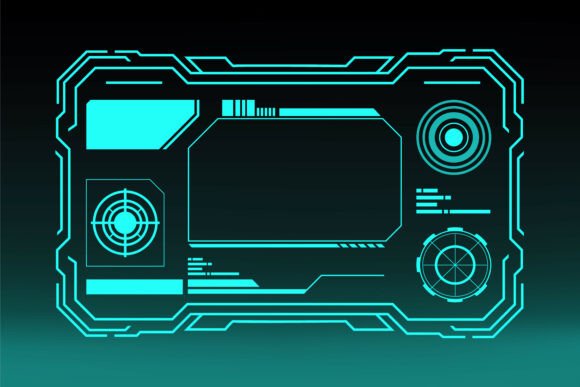
What sets these templates apart is their deliberate focus on three core use cases: digital data (metrics, graphs, readouts), navigation controls (radars, compasses, waypoint markers), and interactive gaming elements (health bars, inventory slots, targeting reticles). This isn’t a random collection of shiny lines—it’s a systematic kit designed for real projects. The components are balanced for readability even at small screen sizes, and their geometric precision makes them ideal for both static mockups and animated sequences.
- Data display – Reticle‑style gauges, circular progress indicators, and segmented number readouts that make metrics feel alive.
- Navigation tools – Radar arcs, direction pointers, and coordinate grids that guide the user’s eye naturally.
- Game‑style HUDs – Health, stamina, ammo counters, and status icons that integrate seamlessly into interactive experiences.
Evolution of the Sci‑Fi HUD: From Film Prop to Design Staple
Twenty years ago, a convincing HUD look required after‑effects wizardry or custom 3D modeling. Today, a Sci-Fi HUD User Interface Design Templat downloaded as an editable vector file can be customized in minutes. This democratization of design is a major reason for the template’s popularity. The shift from hard‑coded pixel graphics to flexible vector assets means that the same template can scale from a smartwatch screen to a 4K video overlay without losing quality.
Moreover, the rise of no‑code platforms and user‑focused prototyping tools has made interface design a collaborative skill. Copywriters, marketers, and educators can now mock up a futuristic dashboard without relying on a dedicated graphics department. The template acts as a shared visual vocabulary—everyone involved can see how the data might look and feel before development begins.
Fully Editable Vector Design: Flexibility at Your Fingertips
One of the most practical benefits of the Sci-Fi HUD User Interface Design Templat is that it’s built entirely with vectors. Every line, gauge, and outline can be adjusted in your preferred vector editing software—whether that’s Adobe Illustrator, Affinity Designer, or even free alternatives like Inkscape. This means you’re never locked into a preset look. Need to change a radar arc from cyan to orange to match your brand palette? That’s a few clicks. Want to stretch a navigation panel to fit a vertical layout? The vector math handles it cleanly.
For professionals who work with motion graphics, vector‑based HUD components are a gift. They can be imported into After Effects or similar tools, and each element remains independently scalable and animatable. No pixelation, no edge artifacts, no time wasted rebuilding geometry.
100 Color Customizable: Adapting to Any Brand or Mood
Color is arguably the most powerful tool in a designer’s kit—and these templates give you full control. With 100 color customizable elements, you can shift the entire HUD from a clinical blue‑green corporate look to a fiery orange warning palette or a calm purple sci‑fi ambiance. The tag number isn’t arbitrary: it reflects the sheer number of separate elements (such as lines, fills, borders, and highlight glows) that can be individually recolored. This makes the template suitable for a wide range of tones: from a children’s game to a serious industrial monitoring software.
- Brand consistency – Apply your company’s exact hex values across the entire UI.
- Accessibility – Adjust contrast ratios for different environments (dark mode, bright outdoor usage).
- Mood tailoring – Use warm tones for urgency, cool tones for precision.
Easy to Resize and Modify
“Easy to resize and modify” is not a marketing phrase—it’s a technical reality of vector art. The template’s layers are organized with logical naming, making it straightforward to grab a component, duplicate it, and change its dimensions without breaking the visual harmony. If your project requires a different layout aspect ratio (for example, a vertical smartphone screen versus a widescreen monitor), you can simply group the HUD elements and scale proportionally. The line weights and glow effects remain consistent because they are defined relative to the vector paths, not fixed pixel sizes.
For interactive game developers, this ease of modification is crucial. Game UIs often need to be adjusted on the fly after playtesting. With a fully editable template, you can tweak the size of a health bar or shift a minimap’s position in minutes—without touching the underlying code. This speeds up iterations and lets you focus on gameplay balance rather than graphic grudges.
Source Files Included EPS: Industry‑Standard Compatibility
The inclusion of source files in EPS format is a deliberate choice for cross‑platform compatibility. EPS (Encapsulated PostScript) is a robust vector format that can be opened by virtually every professional design application, including older versions of software. Unlike proprietary file formats that might require specific plugins or subscriptions, an EPS file ensures that your design team—or future collaborators—can access the full editability of the template. This forward‑thinking approach aligns with the needs of professionals who value long‑term asset usability.
Note: For those working in modern workflows, many vector editors can also convert EPS to SVG or AI without loss. This makes the template a reliable foundation whether you’re publishing on the web (SVG), embedding in a video (AI), or preparing print materials (EPS).
Practical Implications for Creators and Businesses
Let’s move beyond features and into real‑world application. How does using a Sci-Fi HUD User Interface Design Templat change the way you work?
For Game Developers and Indie Studios
Time and budget constraints are the twin enemies of indie game development. Purchasing a high‑quality HUD template can cut weeks off your UI production schedule. Instead of designing each element from scratch, you begin with a polished library that already communicates a cohesive sci‑fi language. You can then customize the colors and layout to match your game’s specific atmosphere. This is especially valuable for prototyping, where a convincing HUD can make a demo feel complete and attract early testers or investors.
For Marketers and Content Creators
In video marketing, first impressions are formed in seconds. An overlay that uses HUD elements can transform a simple screen recording of a product demo into something that feels like a high‑budget tech reveal. Similarly, for live streams or online courses, HUD‑style lower thirds, progress bars, and news tickers add a professional layer that keeps viewers engaged. Because the template is vector‑based, you can easily animate these elements in your video editor to create scrolling data or pulsing alerts.
For UI/UX Designers and Product Teams
Even if your final product doesn’t use a sci‑fi theme, the structural clarity of HUD components can inspire better dashboard designs. The way these templates handle hierarchical data—using concentric rings, color‑coded sectors, and clear labeling—can inform more usable interfaces for analytics platforms, control panels, or monitoring apps. Many designers use HUD templates as moodboards or wireframe overlays to communicate a “futuristic, data‑rich” feel to stakeholders. The editable vector source makes this a low‑risk, high‑return exercise.
Adapting to Changing Habits and User Expectations
Users have become accustomed to interfaces that feel responsive and layered. Flat design, while still prevalent, is increasingly being supplemented with depth, subtle animations, and contextual highlights. Sci‑fi HUD elements fit this trend naturally. They introduce visual complexity without clutter by relying on geometric order and transparency. The modern user, especially in the 20–50 age range, appreciates interfaces that reward exploration—things like tooltips that appear over a glowing button or a radar sweep that shows real‑time updates. Templates that include interactive gaming elements (like skill cooldown indicators) can easily be adapted for nongaming contexts, such as loading screens or onboarding flows.
Furthermore, the rise of remote collaboration has pushed teams to seek assets that “just work” across different software ecosystems. The EPS source files, combined with the easy resize capability, mean that a designer on macOS, a developer on Windows, and a marketer using a web‑based tool can all access the same HUD components without format clashes.
Getting the Most Out of Your Sci‑Fi HUD Template
To fully leverage these templates, consider the following practical steps:
- Plan your color scheme in advance. Use the 100 customizable color elements to create a unified palette. Limit it to 3–5 core colors plus one accent for alerts or highlights.
- Test readability at small sizes. While vectors scale infinitely, the optical weight of thin lines can get lost on mobile screens. Modify stroke widths as needed during the resize step.
- Combine with typography. A sci‑fi HUD without clear labels is just decoration. Use a clean, modern sans‑serif font for data values and ensure sufficient contrast against the HUD’s background.
- Use the elements as building blocks, not constraints. You can mix parts from the template with your own custom graphics. The EPS file’s layer structure makes it easy to delete or hide components you don’t need.
- Think about motion. If you’re using the template in video or interactive media, animate the gauges, sweep lines, or blinking indicators. Even subtle movement (e.g., a gentle pulsing of a reticle) can elevate the perceived quality hugely.
Looking Ahead: The Role of HUD Templates in Future Design
As augmented reality (AR) and mixed reality (MR) become more mainstream, the demand for HUD‑style overlays will only increase. Navigation controls, data readouts, and interactive indicators will become a standard part of everyday interfaces—think AR glasses displaying directions or inventory scanners in warehouses. The same principles that make today’s Sci-Fi HUD User Interface Design Templat effective (clarity, hierarchy, visual feedback) will be even more critical when users are interacting with persistent, heads‑up displays in the physical world. By familiarizing yourself with these templates now, you’re building skills and assets that will remain relevant as interface design evolves.
In the shorter term, we can expect more integration of HUD aesthetics into brand identities. A start‑up that wants to position itself at the edge of technology might use HUD‑inspired graphics in its pitch deck, on its website, or even in its office signage. The fully editable nature of the template means it can serve as the visual starting point for a whole brand system—not just a single screen.
Final Thoughts
The Sci-Fi HUD User Interface Design Templat is much more than a collection of cool lines. It’s a practical, adaptable asset for anyone who wants to communicate data, navigation, and interactivity in a visually compelling way. With fully editable vectors, 100 customizable colors, easy resizing, and industry‑standard EPS source files, it lowers the barrier to high‑quality design. Whether you’re a game developer racing to a deadline, a marketer preparing a product launch, or a designer exploring new visual directions, this template offers both immediate utility and long‑term value. The future of interfaces may be uncertain, but the need for clear, engaging, and flexible HUD elements is secure.