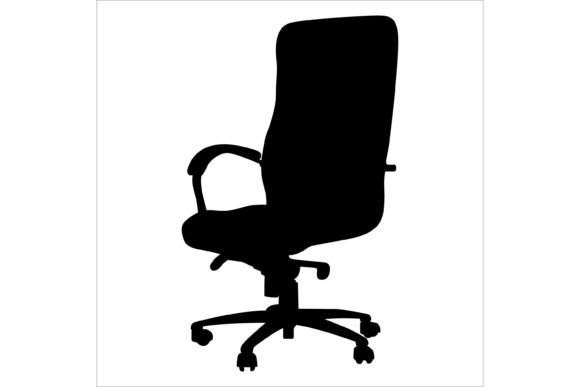
Office Chair Silhouette Vector Art: Strategic Design for Modern Branding and Digital Workflows
In an era where visual communication often precedes text, the assets you choose for your projects carry measurable weight. Office Chair Silhouette Vector Art has emerged as more than a decorative element; it represents a deliberate tool for shaping perception, streamlining design processes, and reinforcing brand identity. Whether you are developing a website for a furniture startup, crafting a presentation on workplace ergonomics, or producing marketing materials for a co-working space, understanding how to use this resource strategically can elevate your output and save you time.
This article explores the practical and strategic value of Office Chair Silhouette Vector Art. You will learn when to use it, how to integrate it into your workflow, and what to consider before relying on it for critical projects. The goal is to help you make informed decisions that align with your broader objectives, rather than simply adding graphics without purpose.
What Office Chair Silhouette Vector Art Offers Beyond Aesthetics
At its core, Office Chair Silhouette Vector Art is a simplified, scalable representation of a chair, stripped of color gradients and surface textures. The version described here—a gaming chair silhouette with a high-back, adjustable ergonomic design—captures the essential form and contours of a modern seating solution. The black silhouette emphasizes shape, proportion, and posture, making it a versatile asset for many contexts.
Why would a marketer, designer, or entrepreneur choose a silhouette over a detailed photograph? The answer lies in clarity, focus, and adaptability. A silhouette removes distractions. It directs attention to the structure and function of the chair, which is especially useful when you want to communicate concepts such as support, comfort, or modernity without overwhelming the viewer. This makes it an excellent choice for interface icons, infographics, and branding elements where simplicity is paramount.
From a file format perspective, receiving the asset as Adobe Illustrator (AI), EPS, SVG, PDF, and JPG, all compressed in a single ZIP file, gives you flexibility. You can edit the vector in Illustrator, scale it indefinitely for print or web, and use the raster version for quick mockups. This combination of formats supports both professional design workflows and quick, everyday use.
Strategic Value in Branding and Positioning
For companies in the furniture, gaming, or office supply sectors, consistency in visual language is critical. Using Office Chair Silhouette Vector Art across your website, social media, product catalogs, and presentations builds a cohesive identity. The silhouette can serve as a consistent motif that customers recognize instantly, reinforcing your brand's association with quality design and purposeful functionality.
Consider an online retailer specializing in ergonomic gaming chairs. Instead of relying solely on product photos, they might use a silhouette as a secondary visual element on category pages, comparison charts, or check-out icons. This approach reduces visual clutter while maintaining a clean, professional appearance. Similarly, an interior designer creating mood boards for home offices can use the silhouette to represent seating options without committing to a specific model or color scheme, allowing the client to focus on layout and flow.
Positioning a brand as modern, clean, and user-centric is easier when your visuals reflect those values. A high-quality silhouette communicates attention to detail and an understanding of minimalist aesthetics. When paired with thoughtful copy and a clear value proposition, it becomes part of a larger strategy to differentiate your business in a crowded market.
Practical Applications Across Professional Scenarios
The usefulness of Office Chair Silhouette Vector Art extends far beyond branding. It can support productivity, learning, and communication in ways that may not be immediately obvious. The following use cases illustrate how different professionals can integrate this asset into their daily work.
Web and UI Design
For web designers, icons and graphical elements must load quickly, scale across devices, and remain legible at small sizes. A vector silhouette meets all three requirements. You can use it as a navigation icon for a seating category, as part of a filter system, or as a visual anchor in a blog post about workstation ergonomics. Because the silhouette is a vector, you can adjust its color to match your palette or invert it for dark mode without losing quality.
When designing a landing page for a productivity course focused on workspace optimization, a silhouette of an ergonomic chair can visually reinforce the message without distracting from the call-to-action. It grounds the design in a real-world object while keeping the focus on the content.
Print and Presentation Materials
In presentations, clarity is king. A detailed photograph of a chair may introduce unintended noise—shadows, reflections, background elements—that competes with your message. A clean silhouette focuses the audience on the idea you are explaining. Whether you are pitching a new office layout to stakeholders or teaching a workshop on proper seating posture, the silhouette acts as a clear, unambiguous visual aid.
For printed materials like brochures, flyers, or posters, the vector format ensures crisp edges at any scale. You can enlarge it for a bold cover image or reduce it for a subtle watermark. Having the PDF version in the ZIP file also simplifies handoffs to print vendors who prefer that format.
Content Creation and Social Media
Bloggers and content creators often need visuals that are both attractive and legally safe to use (copyright-free or licensed assets). A purchased or licensed silhouette vector provides that peace of mind. You can feature it in YouTube thumbnails, Instagram posts, or blog headers without worrying about attribution issues. For a series on home office setups, repeating the same silhouette across multiple posts creates a visual thread that ties the content together, building recognition with your audience.
Educators and trainers can incorporate the silhouette into slides, handouts, or e-learning modules to illustrate concepts related to ergonomics, furniture selection, or workspace design. The simplified form helps learners focus on the key points, such as lumbar support or armrest adjustability, without being distracted by decorative details.
Before You Integrate: What to Consider
Strategic use of any design asset requires thought and intention. While Office Chair Silhouette Vector Art offers many benefits, relying on it without clear goals can lead to missed opportunities or even miscommunication. Here are several factors to weigh before making it a part of your project.
Audience and Context
Ask yourself: Who is viewing this asset, and what do they need to understand? A silhouette works well when the audience is already familiar with the object or when the context suggests the shape's meaning. For a general audience, a gaming chair silhouette may be immediately recognizable. However, if your audience includes people unfamiliar with modern chair designs, or if you are presenting to an international market where chair conventions differ, the silhouette might require a label or supporting text to avoid ambiguity.
Consider also the emotional tone you want to set. A stark black silhouette conveys efficiency, modernity, and focus. This aligns well with tech, productivity, and professional design contexts. If your project calls for warmth, playfulness, or luxury, a silhouette might feel too cold or minimal. In such cases, you might adjust the color, add subtle texture, or combine it with other visual elements to achieve the desired effect.
Project Goals and Priorities
What is the primary purpose of the visual? If your goal is to drive sales through detailed product imagery, a silhouette alone will not suffice. It is a supporting asset, not a replacement for high-resolution photography or video. If your goal is to build a consistent, scalable visual system across multiple touchpoints, then the silhouette becomes a strategic asset. It can unify materials that would otherwise feel disconnected.
When planning, map out where the silhouette will appear and what role it will play. Will it be a primary graphic on a hero section, a supporting icon next to bullet points, or a background pattern? Each use case implies different design considerations. For example, using it as a repeating pattern requires careful attention to spacing and alignment, while using it as a single focal point demands that the silhouette be visually striking and well-proportioned.
Risks of Using Silhouettes Without a Strategy
One risk is over-reliance on generic imagery. If many competitors use similar silhouettes, your brand may blend in rather than stand out. A gaming chair silhouette, while sleek, is not unique to your business unless you customize it—by adjusting the line art, adding a distinctive color, or pairing it with a unique typographic treatment.
Another risk is misinterpretation. Silhouettes, by their nature, omit detail. If the shape resembles other objects (e.g., a dentist chair or an automotive seat) in the specific context you place it, viewers may misunderstand the message. Testing the asset with a sample audience or getting feedback from colleagues can help you catch such issues early.
Finally, using vector art without a clear placement strategy can create visual clutter. When multiple silhouettes compete for attention on a single page, the result can feel chaotic. Apply the same design discipline you would with any image: use white space generously, align elements thoughtfully, and ensure each graphic serves a specific purpose.
Practical Planning Tips for Decision-Makers
If you are an entrepreneur, marketer, or creative director evaluating whether to invest in Office Chair Silhouette Vector Art for your next project, consider these actionable steps.
First, audit your current visual assets. Identify gaps where a clean, scalable icon or silhouette could replace a less effective image or fill a need for consistency. For example, if your website uses inconsistent icons for different product categories, a unified set of silhouettes could bring coherence.
Second, sketch out a usage map. Decide which pages, materials, or channels will feature the silhouette and in what capacity. Consider the customer journey: could a silhouette help a shopper quickly identify a chair type on a category page? Could it serve as a recognisable symbol in a loyalty program or instructional guide?
Third, plan for customization. If you have access to the AI, EPS, or SVG files, invest time in adapting them to your brand. Change the stroke weight, add a brand color, or combine the silhouette with other shapes to create something distinct. Even small modifications can make a generic asset feel proprietary. The edited file can then be exported to PDF for print or JPG for web use as needed.
Fourth, document your file management. Since the files come compressed in one ZIP folder, you should extract them and organize them into your digital asset library with clear naming conventions. This will save time when you or your team need to locate the file months later. Consider creating subfolders for the vector source files, PDF proofs, and raster export versions.
Long-Term Value: When a Simple Shape Outperforms a Complex Image
The longevity of vector assets is one of their strongest advantages. Unlike trends in photography or 3D rendering that may date quickly, a well-designed silhouette retains its relevance. It is timeless in its simplicity. If you produce marketing materials today and revisit them in three years, the silhouette will likely still feel current, provided the chair design itself remains popular. This makes it a wise investment for small businesses and freelancers who want assets that work across multiple campaigns without constant replacement.
Furthermore, the scalability of vector formats means your asset can evolve with your business. As you expand from a website to printed catalogs, trade show banners, mobile apps, and video slides, the same source file can be repurposed at any size without degradation. The PDF version in the package also gives you a reliable option for sharing with external partners who may not have vector editing software.
Ultimately, thoughtful use of Office Chair Silhouette Vector Art supports long-term goals by reducing design friction, improving brand recognition, and enabling faster content creation. It is a tool, not a shortcut. When selected with intention and deployed with planning, it strengthens your visual communication and helps you achieve better results across projects.
Before downloading and extracting your files, take a moment to consider the specific outcomes you want to achieve. Let the silhouette serve your strategy, not the other way around.