The Mouse Pad Milk Carton: A Creative Desk Upgrade That Actually Works
If you have spent any time browsing desk accessories or custom printed merchandise recently, you have likely come across the Mouse Pad Milk Carton. At first glance, it looks like a playful novelty item—a mouse pad shaped and printed to resemble a miniature milk carton. But once you see one in use, it becomes clear that this design is not just about nostalgia or quirky aesthetics. It is a genuinely practical desk accessory that combines ergonomic function with visual appeal. Whether you are a graphic designer tired of a dull workspace, a gamer who wants a cohesive setup, or a remote worker looking for small improvements in daily comfort, the Mouse Pad Milk Carton offers something real.
However, because this product often involves sublimation mouse pad printing and custom PNG file preparation, many people make avoidable mistakes when choosing, purchasing, or using one. These errors can turn what should be a fun, functional upgrade into a frustrating waste of money. This article walks through the most common pitfalls, explains why they matter, and shows you how to get it right the first time.
What Makes a Mouse Pad Milk Carton Different
A standard mouse pad is rectangular, bland, and designed purely for function. A Mouse Pad Milk Carton breaks that mold by offering a 3D-illusion shape printed onto a flat surface. The design mimics the classic cardboard milk carton, complete with a gable top, brand-style graphics, and sometimes even a "refrigerate" label. The appeal is twofold: it adds personality to your desk, and the unusual shape can actually improve how you position your wrist and hand during mouse use.
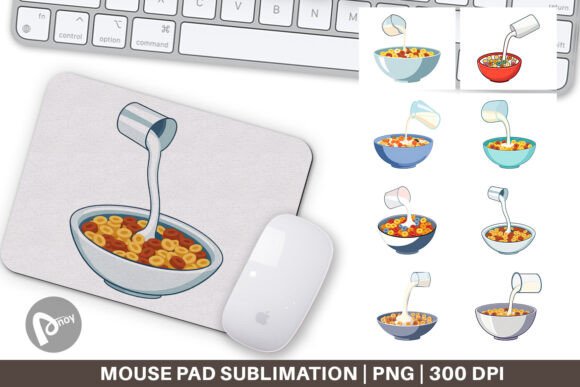
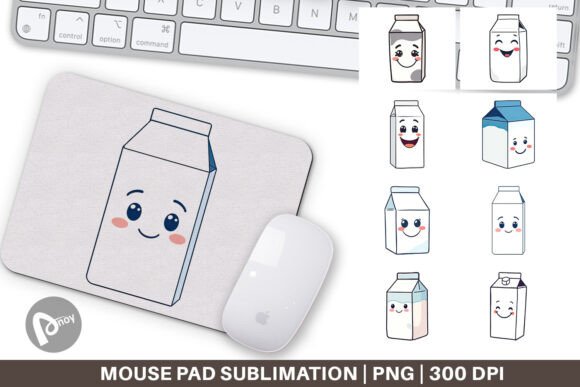
Because these pads are typically made using sublimation mouse pad manufacturing, the print quality is exceptionally durable. Sublimation dyes the fabric directly rather than sitting on top like a sticker, so the image does not peel, fade, or crack over time. That is why the PNG file you receive—usually 8 files at 9.5 x 8.1 inches at 300 dpi—is so important. The resolution and format directly determine whether your final product looks crisp or blurry.
Common Mistake 1: Choosing Design Over Usability
The biggest mistake people make with a Mouse Pad Milk Carton is prioritizing looks over function. It is easy to fall in love with a highly detailed milk carton illustration that covers every inch of the pad, only to discover that the busy pattern interferes with your mouse tracking. Optical and laser sensors can struggle on surfaces with high-contrast repeating patterns, especially if the design includes dark lines or small text in the center area where the mouse moves.
This problem is easily fixed with a simple rule: the center third of the pad should have minimal detail or solid color. When you look at the PNG file before printing or buying, check that the area where your mouse will rest is not overloaded with graphics. Good designers will place the "milk carton" imagery off-center or toward the top edge, leaving the lower center quiet for actual mouse use. If you are using a sublimation template maker or ordering from a print shop, ask about the usable area. A pad that looks perfect flat but performs poorly in use is not worth the desk space.
Common Mistake 2: Ignoring the File Specifications
The listing you saw promised "YOU WILL RECEIVE PNG FILE 8 File Png 9,5 x 8,1 inches 300 dpi." That is a clear specification, but many people either ignore it or misunderstand what those numbers mean. If you are a hobbyist or small business owner printing your own sublimation mouse pad blanks, using a file that is smaller than 9.5 x 8.1 inches will leave white borders. Using a file with lower than 300 dpi will produce a soft, pixelated image. Using a PNG with a transparent background when the blank is white? That works fine. But if your blank is colored or you intend to layer designs, transparent PNGs can cause color shift issues.
Here is the practical advice: always check the actual pixel dimensions of the file. At 300 dpi, 9.5 inches equals 2850 pixels, and 8.1 inches equals 2430 pixels. If your file is smaller than that, either the resolution is wrong or the physical size is incorrect. Rescaling a low-resolution image to fit a larger pad will ruin the print quality. When you download your 8-file pack, open one file and confirm its dimensions in your image editor before sending it to print. That five-minute check saves you from receiving a batch of unusable pads.
Common Mistake 3: Assuming All Sublimation Mouse Pads Are the Same
Not all sublimation mouse pad blanks are created equal. The base material—usually a polyester fabric surface over a rubber or foam base—varies significantly in thickness, density, and surface smoothness. A Mouse Pad Milk Carton with a vivid design printed on a thin, low-quality blank will feel cheap, slide across your desk, and wear out quickly. Worse, if the blank has a rough surface texture, the sublimation ink can appear dull or uneven because the dye does not saturate uniformly.
The mistake here is buying the cheapest blank you can find. Spend a little more for a blank that is at least 3mm thick with a non-slip rubber base. The surface should feel smooth and slightly soft to the touch, not plasticky or rough. If you are printing for resale or gifting, the quality of the blank reflects directly on your brand or your thoughtfulness. A premium sublimation mouse pad blank with a well-designed milk carton graphic becomes something people keep for years. A cheap one gets tossed in a drawer after two weeks.
Common Mistake 4: Overlooking the "Extra" Files in the Pack
The product description says you will receive "8 File Png". That is not one design repeated eight times. Typically, a multi-file pack for a Mouse Pad Milk Carton includes variations: different milk carton angles (front, side, 3/4 view), different background colors, perhaps a version with and without the "milk" label text, or different flavor variations like chocolate, strawberry, or oat milk. Some users download the pack, open only the first file, and ignore the rest.
This is a missed opportunity. If you are customizing for your own desk, the side-angle version might look better next to your keyboard than the front-facing one. If you are printing for multiple people, having flavor variations lets each person choose their favorite. If you are a content creator or small business owner, the extra files give you flexibility to offer different SKUs without redesigning from scratch. Take the time to open all eight files. Compare them. Choose the one that works best for your specific setup. The variety is a feature, not an afterthought.
Common Mistake 5: Forgetting About Desk Integration
A Mouse Pad Milk Carton is a statement piece. But a statement piece that clashes with your desk aesthetic can feel jarring rather than delightful. Many people buy one based solely on the photo of the pad itself, without considering how it fits into their existing workspace. A bright red "Strawberry Milk" carton pad on a dark wooden desk might look great. That same pad on a bright white desk with red accents might look chaotic. And if your desk is covered in cables, sticky notes, and coffee rings, even the best-designed pad will look out of place.
The correction is simple: visualize the pad in your actual workspace before committing. If you are ordering a custom print, use the PNG file and drop it into a mockup of your desk using a free photo editor. If you are buying a pre-made pad, check that the color palette complements your other accessories. The goal is a cohesive look that enhances your productivity by making your desk a place you enjoy sitting at every day. The Mouse Pad Milk Carton works best when it is the highlight of a clean, intentional setup—not a random novelty item dropped onto a cluttered surface.
How These Mistakes Affect Your Satisfaction
Each of these errors has a real consequence. A busy design causes mouse tracking issues, which means you fight your cursor instead of working naturally. Wrong file dimensions produce a blurry or uneven print that looks unprofessional. A cheap blank feels slippery and thin, reducing comfort and wrist support. Ignoring the extra files means you miss the perfect version for your needs. And poor desk integration makes the pad feel like an afterthought rather than an upgrade. Individually, these are small issues. Together, they turn a creative desk accessory into a disappointment.
On the other hand, when you get it right, the Mouse Pad Milk Carton genuinely improves your daily computer use. The unique shape naturally guides your hand into a healthier position compared to a generic rectangular pad. The high-quality sublimation print resists wear, keeping the design sharp for months or years. And the visual enjoyment of looking at something playful but purposeful can subtly boost your mood and focus. For professionals, creators, and gamers who spend hours at a desk, these small gains compound into real productivity improvements.
What to Check Before You Buy or Print
Before you click "purchase" or hit "print," run through this quick checklist based on the mistakes above:
- Check the file dimensions: Confirm your PNG is exactly 9.5 x 8.1 inches at 300 dpi. No resizing needed.
- Check the design layout: Ensure the central mouse area is not too busy with patterns or dark lines.
- Check the blank quality: Look for 3mm+ thickness, a non-slip rubber base, and a smooth polyester surface.
- Check all eight files: Browse every variation in your pack before settling on one.
- Check your desk: Visualize the color and style of the pad against your current desk setup.
These steps take ten minutes total and prevent 90% of the common frustrations people encounter.
The Bottom Line on the Mouse Pad Milk Carton
The Mouse Pad Milk Carton is more than a gimmick. It is a clever fusion of creative design and practical desk ergonomics, made possible by durable sublimation mouse pad printing and careful file preparation. Whether you are buying one for yourself, printing a batch for your small business, or creating a custom gift, the difference between a satisfying purchase and a disappointing one comes down to a few easily overlooked details. The design should be eye-catching but functional. The file must match the specification exactly. The blank needs to be good quality. And the pad should fit your space visually as well as it fits your mouse physically.
When you take those factors seriously, the result is a desk accessory that works harder than it looks—and looks better than it has any right to. That is the real value of a well-executed Mouse Pad Milk Carton. It is not just a cute object. It is a small, daily reminder that your workspace can be both beautiful and practical at the same time.