The Art of Game Narrative: How a Woman Writing Game Story on a Laptop Shapes Modern Gaming
Behind every immersive game world lies a carefully woven story. While programmers build the mechanics and artists craft the visuals, it is the narrative designer — often a woman writing game story on a laptop — who breathes life into characters, conflict, and meaning. This role has evolved from a niche specialty into a cornerstone of game development, influencing how players connect emotionally with digital experiences. Understanding the work of a game story specialist reveals not only the craft of storytelling but also the collaborative heartbeat of modern game creation.
The Narrative Designer as Creative Architect
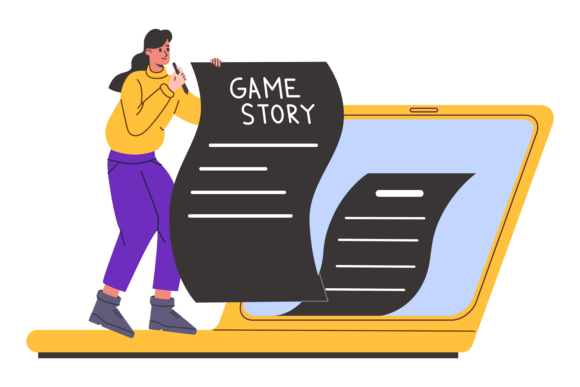
The image of a woman writing game story on a laptop captures more than a solitary act of creativity. It represents a profession where writing meets systems thinking. A narrative designer does not simply write dialogue or plot points; she constructs the structural backbone of a game's story. This involves defining character arcs, branching dialogue trees, quest motivations, and even environmental storytelling. The laptop becomes her studio, her notebook, and her bridge to the rest of the development team.
Unlike a novelist or screenwriter, a game writer must think in non-linear terms. Every decision the player makes can alter the narrative flow, requiring the writer to map out multiple possibilities. This is where the specialist creating computer game stories demonstrates expertise that blends literary skill with game design principles. She must anticipate player agency while maintaining a coherent emotional arc. The result is a living story that feels personal, responsive, and memorable.
Tools of the Trade: From Laptop to Game Engine
The phrase "woman writing game story on laptop" often conjures the idea of simple word processing. In reality, her toolkit is far more varied. She may use specialized narrative design software like Twine or Articy:draft to map branching paths, or she might write directly into the game engine's dialogue system using custom scripting languages. Many narrative designers also work with version control systems and collaborative platforms like Google Docs or Notion, ensuring that writers, designers, and producers stay aligned.
- Dialogue trees: Structuring player choices that lead to different outcomes
- Character bibles: Maintaining consistent voice, motivation, and backstory across a large cast
- Quest design documents: Connecting story beats to gameplay objectives and rewards
- Lore bibles: Building the world's history, culture, and rules without overwhelming the player
Each of these artifacts requires a unique blend of creative writing and logical organization. The woman writing game story on a laptop must switch fluidly between poetic description and structured data. This versatility is what makes her invaluable in a fast-paced development environment.
Collaboration Across Disciplines
Game development is inherently collaborative, and the narrative designer sits at the intersection of many departments. She works closely with level designers to ensure that story moments are physically playable, with artists to make sure cutscenes convey the right tone, and with programmers to implement dialogue systems or cinematic triggers. The specialist creating computer game stories must also communicate with producers about scope and deadlines, and with marketing teams to highlight narrative hooks without spoiling surprises.
In this context, the woman writing game story on a laptop is not an isolated creator. She is a hub of communication, translating narrative intent into actionable direction for others. This collaborative dynamic demands that she is not only a writer but also a diplomat, a systems thinker, and sometimes a mediator between conflicting creative visions. The strongest narrative leads are those who can articulate why a story choice matters for player experience, not just for the plot.
Why Game Narrative Matters for Player Engagement
Players today expect more than challenge; they seek meaning. A well-told story can transform a simple puzzle game into a meditation on loss, or turn a fast-paced shooter into a exploration of loyalty and sacrifice. The woman writing game story on a laptop understands that narrative is not a layer applied after gameplay is done. Instead, she weaves story into mechanics. The act of saving a character, choosing a faction, or exploring a ruin becomes a storytelling event in itself.
Consider the impact of a single narrative choice in a role-playing game. When a player decides to spare an enemy or betray an ally, that decision carries weight because the narrative designer has built a context that makes the outcome feel real. This emotional investment increases playtime, replayability, and word-of-mouth recommendation. For indie studios especially, a compelling story can be the differentiator that lifts a game above hundreds of competitors on digital storefronts.
Accessibility and Representation in Storytelling
Another crucial dimension of the narrative designer's work is representation. A diverse team — including women and non-binary creators — brings perspectives that lead to richer, more inclusive stories. The woman writing game story on a laptop often champions characters who reflect real human complexity, avoiding stereotypes and offering players new windows into different experiences. This is not simply a matter of social responsibility; it is also a business advantage. Audiences are increasingly drawn to games that treat them with respect and offer meaningful stories they can see themselves in.
Moreover, narrative designers are at the forefront of making games accessible to players with different abilities. By writing clear, concise dialogue, providing audio descriptions, and designing narrative experiences that do not rely solely on visual cues, they help ensure that story-driven games can be enjoyed by a wider audience. This inclusive mindset starts at the laptop screen, where every word is chosen with the player in mind.
The Creative Process: From Idea to Interactive Story
Understanding the workflow of a woman writing game story on a laptop helps demystify how game narratives are built. It typically begins with a high-level concept — a theme, a setting, or a character dilemma. From there, the narrative designer develops a story bible that outlines the central conflict, key characters, and the world's rules. This document evolves as the game prototype takes shape, because story and gameplay must co-evolve.
- Research and inspiration: Drawing from literature, history, film, and personal experience
- Structural design: Mapping narrative arcs onto gameplay progression
- Iterative writing: Drafting, playtesting, and rewriting based on feedback
- Localization readiness: Writing with translation and cultural adaptation in mind
- Final polish: Ensuring consistency, pacing, and emotional impact across all content
Each stage involves both creative leaps and rigorous editing. The specialist creating computer game stories must be willing to cut beloved scenes if they do not serve the player's journey. This discipline is what separates professional game writing from amateur fan fiction. It requires a deep understanding of pacing, dramatic tension, and the interactive medium's unique constraints.
Balancing Linear Narrative with Player Freedom
One of the greatest challenges for any narrative designer is finding the right balance between authorial intent and player agency. Too much linearity can make a game feel like a movie with interruptions. Too much freedom can lead to story incoherence or player confusion. The woman writing game story on a laptop must decide where to guide the player and where to let go. This often involves creating "story beats" that are fixed emotional anchors, while allowing the player to choose how they reach those moments.
For example, in an open-world adventure, the central mystery might be revealed in a climactic scene, but the player can discover clues in any order. The narrative designer must ensure that each path feels satisfying and that no essential piece of information is missed. This kind of non-linear storytelling requires careful planning and extensive playtesting. It is a discipline that combines the creativity of a novelist with the precision of a game designer.
Career Pathways and Skills for Aspiring Narrative Designers
The image of a woman writing game story on a laptop often inspires others who dream of breaking into the industry. But the path is not simply about writing talent. Successful narrative designers typically possess a portfolio that demonstrates interactive writing, familiarity with game engines like Unity or Unreal, and an understanding of game design principles. Many have backgrounds in creative writing, journalism, or film, but they also learn to think in systems.
- Interactive writing samples: Short games, mods, or interactive fiction pieces
- Collaboration experience: Participating in game jams or team projects
- Technical literacy: Basic scripting, version control, and dialogue tool proficiency
- Critical analysis: Ability to dissect existing game narratives and propose improvements
The specialist creating computer game stories also benefits from networking within the industry, attending conferences like the Game Developers Conference (GDC), and learning from veteran narrative designers through mentorship or online courses. The field is competitive, but the demand for skilled writers who understand interactivity continues to grow. Studios large and small recognize that a compelling story can be the difference between a forgotten title and a beloved classic.
Remote Work and the Modern Narrative Designer
Many narrative designers work remotely, especially in the wake of global shifts toward distributed teams. The woman writing game story on a laptop can be based anywhere, collaborating with developers across time zones. This flexibility opens opportunities for writers who live outside traditional game development hubs. However, it also requires strong communication skills and the ability to advocate for narrative priorities without being physically present in the studio.
Remote narrative designers often rely on asynchronous tools like shared documents, video updates, and structured feedback forms. They must be proactive in seeking input from the team and in presenting their work clearly. Despite the distance, the role remains deeply collaborative. A woman writing game story on a laptop may be physically alone, but she is never creatively isolated.
Ethical Considerations and Responsibility in Game Storytelling
With great narrative power comes ethical responsibility. Games can perpetuate harmful stereotypes, normalize violence, or reinforce biases if story choices are made carelessly. The narrative designer holds a key position in shaping what players perceive as normal or heroic. A thoughtful woman writing game story on a laptop considers the implications of her characters, plotlines, and player choices. She asks hard questions about representation, consequences, and the messages the game sends.
This is not about censorship but about intentionality. For instance, a story about war can explore the horrors of conflict without glorifying violence. A character who is a thief can be portrayed with nuance rather than as a caricature. The specialist creating computer game stories incorporates ethical reflection into her craft, which ultimately leads to richer, more mature storytelling that resonates with adult audiences.
Future Trends in Game Narrative
As technology advances, the role of the narrative designer continues to expand. Artificial intelligence tools can now generate dialogue or suggest branching paths, but they cannot replace the human insight that makes a story emotionally coherent. The woman writing game story on a laptop will increasingly work alongside AI as a creative partner, using procedural generation to create dynamic story elements while maintaining authorial control over core narrative themes.
Virtual reality and augmented reality also present new frontiers. In VR, the player is physically present in the story world, which demands even greater attention to environmental storytelling and player comfort. Narrative designers must consider spatial audio, gaze direction, and even the player's physical movement as part of the narrative experience. These innovations ensure that the craft of game writing remains both challenging and vital.
Practical Advice for Hiring a Narrative Designer
For studios seeking to strengthen their game's story, hiring a specialist creating computer game stories is a strategic investment. Look for candidates who can show both writing samples and evidence of systems thinking. A strong portfolio might include a branching narrative demo, a design document, or a published game with a story-driven focus. During interviews, ask how they approach player agency, how they handle conflicting feedback from the team, and how they measure narrative success.
It is also worthwhile to observe how a narrative designer communicates. The woman writing game story on a laptop might be the quietest person in the room, but her ideas should be clear and persuasive. She should be able to explain why a certain story beat works for the player, not just for the plot. This ability to think from the player's perspective is what makes a great narrative designer truly indispensable.
Final Thoughts on the Craft
The next time you play a game that moves you — that makes you laugh, cry, or pause in thought — remember the woman writing game story on a laptop who helped make that moment possible. Her work is often invisible, woven into the fabric of code and art, but its impact is unmistakable. She is a specialist, a collaborator, and a storyteller for an interactive age. And her laptop is the quiet engine of worlds yet to be explored.