Mouse Pad Museum Dino Skeleton: Where Prehistoric Art Meets Workspace Precision
The humble mouse pad has undergone a quiet revolution. Once a purely functional rectangle of foam and fabric, it now serves as a canvas for personal expression, a tool for ergonomic comfort, and a surprisingly influential element in daily productivity. Among the most compelling designs emerging in this space is the Mouse Pad Museum Dino Skeleton, a sublimation-printed desk accessory that transforms your workstation into a gallery of prehistoric wonder. This article explores how this specific design, delivered as a high-resolution PNG file, bridges paleontological fascination with modern computing needs, and why it might be the upgrade your desk didn't know it needed.
The Allure of the Dino Skeleton Design: More Than Just a Fossil Print
Why would a dinosaur skeleton appeal to a professional, a gamer, or a creator sitting at a desk for hours each day? The answer lies in a blend of aesthetic depth and psychological resonance. A skeletal illustration of a dinosaur—whether a towering Tyrannosaurus rex, a long-necked Brachiosaurus, or a swift Velociraptor—evokes a sense of scale, history, and the sublime. It reminds us of the immense spans of time that precede our daily routines, offering a subtle perspective shift as we navigate emails, deadlines, and creative blocks.
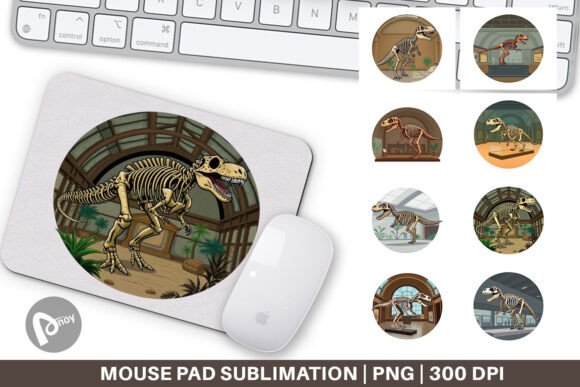
The Mouse Pad Museum Dino Skeleton design capitalizes on this by presenting the skeleton not as a cartoon or a crude outline, but as a detailed, museum-quality exhibit. The intricate ribcages, articulated vertebrae, and imposing skulls are rendered with a precision that rewards close inspection. For the paleontology hobbyist or the educator, it serves as a conversation starter and a learning tool. For the designer or artist, it offers a rich texture and a dramatic focal point that elevates the entire desk setup. And for the remote worker or business owner, it injects a touch of intellectual curiosity into an otherwise functional space.
The sublimation printing process is key here. Unlike standard screen-printed or heat-transfer designs, sublimation dyes the ink directly into the polyester coating of the mouse pad surface. This means the delicate lines of the skeleton fossil, the subtle shading of the bone textures, and the gradient hues of the museum-style background remain crisp, vibrant, and resistant to fading or peeling over time. The result is a mouse pad that looks less like an accessory and more like a piece of portable artwork.
Sublimation Mouse Pad: Technology Behind the Texture
Understanding the sublimation process helps explain why the Mouse Pad Museum Dino Skeleton performs so well. Sublimation printing uses heat to convert solid dye particles into a gas, which then bonds permanently with the polymer coating of the mouse pad fabric. This creates a seamless, durable image that is part of the surface itself, rather than sitting on top of it. For a design featuring the fine details of a dinosaur skeleton, this is non-negotiable. Fine lines stay sharp, colors remain consistent, and edges do not chip or wear away after months of use.
Beyond durability, sublimation contributes to the tactile experience. The surface of a quality sublimation mouse pad is typically smooth but with a slight microfiber texture that provides just enough friction for precise mouse control. Whether you are using an optical, laser, or mechanical mouse, the tracking remains accurate and consistent across the entire pad. The base layer, usually made from natural rubber or a non-slip silicone blend, ensures the pad stays firmly in place during intense work sessions or frantic gaming rounds.
This combination of long-lasting artwork and reliable functionality makes the sublimation mouse pad a favorite among two distinct groups: those who prioritize desk aesthetics and those who prioritize mouse performance. The Mouse Pad Museum Dino Skeleton design sits perfectly at the intersection of these needs, offering a visually arresting image that never compromises the tool's primary purpose.
What You Receive: The PNG File and Its Practical Value
When you acquire the Mouse Pad Museum Dino Skeleton as a digital file, you receive a PNG image measuring 9.5 x 8.1 inches at 300 dots per inch (dpi). This specification is deliberate and serves several purposes. The 300 dpi resolution means the file contains enough detail to print crisply at the given size, ensuring that every bone, joint, and fossilized impression is rendered with clarity. The 9.5 x 8.1 inch dimension is a popular medium-sized mouse pad format, large enough to accommodate a keyboard and mouse comfortably for most users, yet compact enough to fit on smaller desks or alongside a laptop.
The 8 files included is a significant advantage. These may represent different color variations, background styles, or skeleton poses, allowing you to choose the version that best complements your workspace décor. Some may feature a dark, museum-like backdrop with dramatic lighting, while others might present a cleaner, brighter aesthetic suitable for a minimalist desk. This variety provides flexibility: you can rotate designs periodically to keep your workspace feeling fresh, or you can use different versions for different locations—one at the office, one at home, and one for travel.
Having the PNG file also opens up possibilities beyond a single mouse pad. Because it is a high-resolution digital asset, you can use it to create matching coasters, desk mats, or even wall art prints for a cohesive theme. Educators might incorporate the image into classroom materials or digital presentations about paleontology. Content creators can use it as a backdrop element in videos or streams. The file format ensures compatibility with virtually any printing service that accepts PNG, so you are not locked into a single vendor.
Enhancing Productivity and Comfort Through Design
It might seem counterintuitive that a mouse pad featuring a dinosaur skeleton could increase productivity, but research in environmental psychology suggests otherwise. The visual environment of a workspace directly influences cognitive performance, mood, and stress levels. A monotonous or cluttered desk can lead to mental fatigue, while a thoughtfully designed space can enhance focus and creativity. The Mouse Pad Museum Dino Skeleton introduces an element of soft fascination—a term used by psychologists to describe stimuli that capture attention gently without overwhelming it, allowing the mind to rest and reset during brief moments of distraction.
Comfort is equally important. A quality mouse pad provides a consistent surface that reduces wrist fatigue and allows for smoother mouse movements. The non-slip base prevents the pad from shifting during precise tasks, which is especially valuable for graphic designers who rely on pixel-perfect accuracy or gamers who need rapid, controlled movements. The generous 9.5 x 8.1 inch area offers ample space for both keyboard and mouse, reducing the need to constantly reposition your equipment.
For professionals who spend long hours at the computer, small ergonomic improvements compound over time. A mouse pad that stays in place, offers a consistent glide, and provides a comfortable wrist rest area can help prevent repetitive strain injuries. The Mouse Pad Museum Dino Skeleton sublimation mouse pad, with its durable surface and premium base, delivers these ergonomic benefits without sacrificing visual appeal. You are more likely to maintain good posture and take breaks when your workspace feels inviting rather than sterile.
Use Cases Across Different Audiences
The versatility of this design means it finds natural homes across a wide range of users:
- Professionals and remote workers can use it to personalize a home office that often doubles as a living space. The museum-quality design adds a touch of sophistication without being childish or overly distracting. It signals curiosity and attention to detail during video calls when the mouse pad appears in the frame.
- Gamers appreciate the large surface area for sweeping mouse movements and the precision tracking that a quality sublimation pad provides. The dinosaur skeleton theme fits naturally with adventure, survival, and strategy game genres, adding thematic coherence to the gaming setup.
- Creatives and artists will find the detailed skeletal anatomy useful as a visual reference or inspiration. The intricate linework and shading can spark ideas for illustrations, sculptures, or digital art projects. The PNG file can also be incorporated into mood boards or design compilations.
- Educators and researchers can use the mouse pad as a subtle teaching tool. Having a scientifically accurate dinosaur skeleton on the desk invites questions from students and colleagues, creating informal learning moments. It also serves as a tangible connection to content being taught in geology, biology, or history classes.
- Hobbyists and collectors who are passionate about paleontology or natural history will appreciate the museum-grade quality of the design. It allows them to bring a piece of that interest into their daily computing routine, no matter where they work.
Considerations When Choosing a Dino Skeleton Mouse Pad
While the Mouse Pad Museum Dino Skeleton offers many advantages, there are practical considerations to keep in mind. First, because sublimation printing requires a polyester coating, the mouse pad may have a slight sheen or smoothness that differs from traditional cloth pads. Some users prefer a rougher texture for more friction; others enjoy the slick glide of a sublimated surface. If possible, try a sublimation pad before committing to a larger purchase, or start with the medium 9.5 x 8.1 inch size to test your preference.
Second, the design itself, while visually striking, may not appeal to everyone. A detailed skeleton illustration could be perceived as dark or morbid by some, especially in a family-friendly or corporate environment. It is worth considering your workplace culture or the impression you want to project to clients and colleagues. The good news is that the 8-file PNG collection likely includes lighter background options to suit different tastes.
Third, cleaning and maintenance of a sublimation pad is straightforward but requires care. The dyed surface is resistant to fading, but harsh chemical cleaners or abrasive scrubbing can damage the image. A gentle wipe with a damp microfiber cloth is usually sufficient to remove dust and oils. Avoid leaving the pad in direct sunlight for extended periods, as UV exposure can gradually degrade even the most robust dyes.
Structuring Your Desk Around the Museum Experience
To maximize the impact of the Mouse Pad Museum Dino Skeleton, consider how it fits into your overall desk layout. Place it centrally so that the skeleton is visible and accessible without being obscured by other equipment. If you use a secondary monitor or a laptop stand, position the mouse pad to create a balanced composition. Pair it with neutral-colored accessories—a dark desk, a simple lamp, a muted keyboard—to allow the design to stand out as the focal point. Alternatively, lean into the natural history theme with wooden desk organizers, plant accents, or amber-toned lighting to create a cohesive aesthetic.
The psychological benefit of this arrangement is a sense of intentionality. Your workspace becomes a curated environment rather than a random collection of tools. Each item, including the mouse pad, contributes to a narrative that reflects your interests and values. For the remote worker, this can make the difference between feeling like you are toiling in a cubicle and feeling like you are working in a space that is distinctly your own.
Why This Matters for Long-Term Comfort and Satisfaction
Investing in a high-quality, visually engaging mouse pad like the Mouse Pad Museum Dino Skeleton is a small decision with outsized returns. You interact with your mouse pad every single day, often for hours at a time. A cheap, generic pad that wears out quickly or fails to inspire can become a subtle source of irritation. By choosing a durable, sublimation-printed design that resonates with your personal interests, you remove that friction and add a daily dose of visual pleasure.
The 300 dpi PNG file format ensures that you have a permanent, reusable asset. If your current mouse pad wears out after years of use, you can print a new one with the same design. If you decide to upgrade to a larger desk mat, you can scale the file accordingly. This reduces waste and gives you control over your workspace aesthetics over the long term. It also allows you to support small printing businesses or custom shops that offer personalized mouse pad production, rather than being limited to mass-produced retail options.
In a world where digital tools often feel ephemeral and disposable, the Mouse Pad Museum Dino Skeleton stands out as a product that combines practical utility with lasting emotional value. It speaks to our innate curiosity about the natural world, our desire for beautiful surroundings, and our need for functional tools that do not compromise on quality. Whether you are a student sketching out evolutionary timelines, a CEO preparing for a presentation, or a gamer exploring digital landscapes, this mouse pad offers a steady, silent foundation for your work.
Ultimately, the choice of a mouse pad is a personal one. But when that choice is informed by an understanding of design, material science, and ergonomics, it becomes an investment in your daily experience. The Mouse Pad Museum Dino Skeleton sublimation mouse pad, delivered as a versatile PNG file, represents a thoughtful intersection of art and utility—a small tribute to the deep time of dinosaurs, right under your mouse.