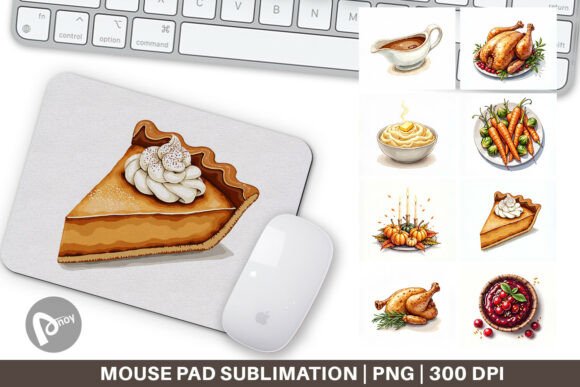
Festive Turkey Watercolor Mouse Pad: A Creative Upgrade for Your Workflow
If you spend hours at a computer—whether designing, coding, writing, or managing a business—the surface beneath your mouse often goes overlooked. Yet that small rectangle of fabric or rubber can influence your speed, accuracy, and even your mood during a long session. The Festive Turkey Watercolor Mouse Pad combines seasonal charm with functional design, and when paired with sublimation mouse pad production, it becomes a versatile asset for anyone who values both aesthetics and efficiency.
Unlike generic pads that fade or peel, a sublimation-printed mouse pad preserves the watercolor turkey motif with vivid, permanent color. The design isn’t just decorative—it serves as a visual anchor that can help you transition between tasks, signal a shift in mood, or simply make your workspace feel intentional. Below, we’ll explore how this item fits into real workflows, how to use it before, during, and after projects, and how to integrate it smoothly into your existing setup.
What Makes This Mouse Pad Different
The Festive Turkey Watercolor Mouse Pad is not a standard mass-produced accessory. It starts as a digital artwork provided as 8 PNG files at 9.5 × 8.1 inches, 300 dpi. That means you or a production partner can print the design yourself using a sublimation printer and a compatible blank mouse pad. This process ensures the artwork becomes part of the fabric—no peeling edges, no fading after a few months of use.
From a workflow perspective, this mouse pad exists at the intersection of three activities: selecting a design that resonates with you, preparing the print file correctly, and then integrating the final product into your daily computing environment. Each of these stages has practical decisions tied to it, and understanding them helps you get the most out of the product.
Before the Project: Preparation and File Handling
Before you even see the finished pad, you’ll work with the PNG files. The resolution—300 dpi—is critical for sublimation. Low-resolution images produce a blurry, unprofessional result, but these files are sized and sharpened for a 9.5 × 8.1 inch surface. Here’s how to handle them:
- Check your printer settings. Most sublimation printers require a mirrored image. The PNGs are provided as-is, so you may need to flip the design horizontally before printing, depending on your software.
- Use ICC profiles. Watercolor designs often contain subtle gradients and pastel hues. A proper color profile ensures the turkey’s feathers and brushstrokes come out as intended, not muddy or oversaturated.
- Prepare the blank. Sublimation works best on polyester-coated surfaces. Confirm your mouse pad blank has a high polyester content (ideally 90% or more). A cotton or low-polyester surface will wash out the colors.
By taking these steps before you print, you avoid costly reruns and wasted materials. This preparation phase is where professionals and hobbyists alike can save time and frustration.
During the Creation: Sublimation Process and Quality Control
Once the file is prepared, the actual sublimation process takes only a few minutes with a heat press. But the way you execute it affects the final quality. Consider these practical tips:
- Temperature and time. Standard sublimation on a mouse pad typically requires 380–400°F (193–204°C) for 45–60 seconds. If your press runs cooler or the pad is thicker, adjust accordingly. Perform a small test if possible.
- Even pressure. A watercolor design with scattered brushstrokes can reveal uneven pressing. Make sure the platen covers the entire pad, and apply firm, even pressure. Uneven heat leads to faint or patchy areas.
- Peel while warm. Sublimation dyes are fully set when the paper is peeled hot or warm (depending on the paper type). Cold peeling can cause ghosting or incomplete transfer.
If you’re producing several pads—for yourself, as gifts, or for a small business—consistency matters. Keep a log of press settings and blank batches so you can reproduce the same results every time.
After the Print: Integrating the Mouse Pad into Your Daily Workflow
The finished Festive Turkey Watercolor Mouse Pad now goes from a production item to an everyday tool. Its role depends on where you place it and how you use your computer. Here are three common scenarios:
For Office Professionals and Remote Workers
A well-designed mouse pad improves glide smoothness and reduces wrist fatigue. The watercolor theme adds a touch of personality to an otherwise neutral desk. If you work through a long spreadsheet or documentation task, the subtle colors can reduce eye strain compared to a stark white or black pad. Place it where you naturally rest your palm—its size (roughly 9.5 × 8.1 inches) fits most standard workspaces without crowding a keyboard or notebook.
For Gamers and Creatives
Gamers often look for precise tracking and a consistent surface. A sublimated pad offers a non-slip base and a smooth, durable top. The turkey motif might be seasonal, but the watercolor style feels artistic rather than cartoonish, making it suitable for a streaming setup or a creative studio. If you use it during gameplay, it can serve as a visual cue—like a “zone” you enter when focused on a match or a project.
For Entrepreneurs and Small Business Owners
If you sell custom mouse pads, the Festive Turkey design can be a limited-edition offering. The 8 PNG files give you multiple variations—different watercolor textures, turkey poses, or background tones. You can sell them as a set or let customers choose their favorite. Because the design is ready-to-print, you skip the design step and go straight to production, saving hours of creative work.
How It Interacts with Other Tools and Resources
No workflow exists in isolation. This mouse pad integrates with several other elements of your workspace and process:
- Printing setup. A sublimation printer, heat press, and protective paper are the core tools. If you already own these, adding a new design is a no-brainer. If you don’t, the files can be sent to a print service that handles sublimation.
- Desk organization. Pair the mouse pad with a matching coaster or desk mat (if available) to create a cohesive themed area. Consistency in visual design can help you maintain focus—it reduces the cognitive load of unrelated clutter.
- Software workflows. Graphic designers might use the PNGs in portfolio mockups to show how the final product looks. Bloggers and content creators can photograph the mouse pad as part of “desk tour” posts, linking back to where they sourced the design.
- Goal tracking. If you’re a productivity-minded user, consider taping a small sticky note to the corner of the pad with your top three tasks for the day. The visual contrast between the watercolor art and the note makes it stand out.
Practical Implementation Tips for Long-Term Use
A mouse pad isn’t a one-off purchase—it’s used daily for months or years. To get the most from your Festive Turkey Watercolor Mouse Pad, keep these factors in mind:
- Cleaning. Sublimated colors are inside the fabric, so you can hand wash the pad with mild soap and water. Avoid bleach or aggressive scrubbing. Air dry flat to prevent warping.
- Edge durability. Some mouse pads have stitched edges; others are raw. If raw, the edges may fray over time. A stitched blank is more durable for heavy use.
- Surface wear. Over months, the tracking area may become shiny from constant mouse movement. Rotating the pad 180 degrees occasionally distributes the wear evenly.
- Seasonal relevance. The turkey theme fits fall and holidays, but a watercolor style remains tasteful year-round. If you prefer to swap designs seasonally, keep the PNG files to reprint when needed.
Where This Fits Broader Productivity and Creativity Workflows
Productivity isn’t just about apps and to-do lists—it’s also about your environment. A workspace that reflects your preferences can reduce friction and improve satisfaction. The Festive Turkey Watercolor Mouse Pad serves as a small but visible element of that personalization.
For example, before starting a creative project, you might deliberately set up your desk with this pad as a ritual. The act of placing the pad, adjusting your mouse, and taking in the colors can signal your brain that it’s time to work. After a task, glancing at the design can serve as a brief mental reset. Over time, these small cues add up to a more intentional workflow.
In a business context, entrepreneurs who sell sublimation products often buy design bundles like this one to expand their catalog without hiring a designer. The 8 PNG files give them variety—different backgrounds (solid, gradient, textured), different turkey illustrations (standing, strutting, with fall leaves). This reduces the cost per design and speeds up product launch timelines.
Smooth Integration into Your Routine
To integrate the mouse pad seamlessly, start by evaluating your current desk layout. Does your mouse cable (if any) get caught on the pad’s edge? Is the pad large enough for your gaming or design mouse movements? The 9.5 × 8.1 inch size is a medium-large rectangle—it accommodates broad sweeps without overwhelming a compact desk. If you use a numeric keypad or a drawing tablet, check if the pad fits alongside them without overlapping.
Next, think about lighting. Watercolor designs often look best under warm or neutral light. Cool LED lights may wash out the colors. Positioning a small desk lamp to cast light diagonally across the pad will highlight the brushstroke texture.
Finally, if you intend to produce more than one pad, batch your sublimation runs. Printing several copies of the same design (or different PNGs) in one session saves time and helps you dial in the settings for consistent quality. Store the extra pads flat, away from direct sunlight, to preserve the colors until you’re ready to use them.
Long-Term Value and Observations
From experience, a sublimated mouse pad holds up better than a standard printed one because the dye bonds with the polymer. The Festive Turkey design, with its layered watercolor washes, actually benefits from this process—the soft edges and translucent shades look more organic when they’re part of the fabric rather than printed on top. After several months of daily use, expect minimal fading if you follow care guidelines.
One observation: many people underestimate how a distinctive mouse pad can spark conversation. In a shared workspace, the turkey watercolor might prompt a colleague to ask about it, leading to a discussion about sublimation or design. For freelancers and small business owners, those conversations can lead to unexpected collaborations or sales. It’s a small detail with potential ripple effects.
Whether you’re printing a single pad for your own desk or a batch for your online store, the Festive Turkey Watercolor Mouse Pad and sublimation mouse pad files give you a head start. The design is ready, the resolution is correct, and the workflow is straightforward. All that’s left is to press, set up, and enjoy a workspace that feels both productive and personal.